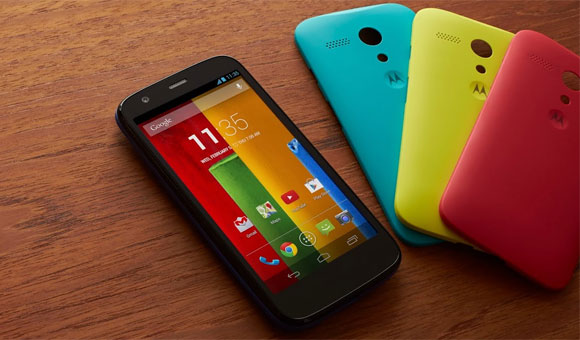
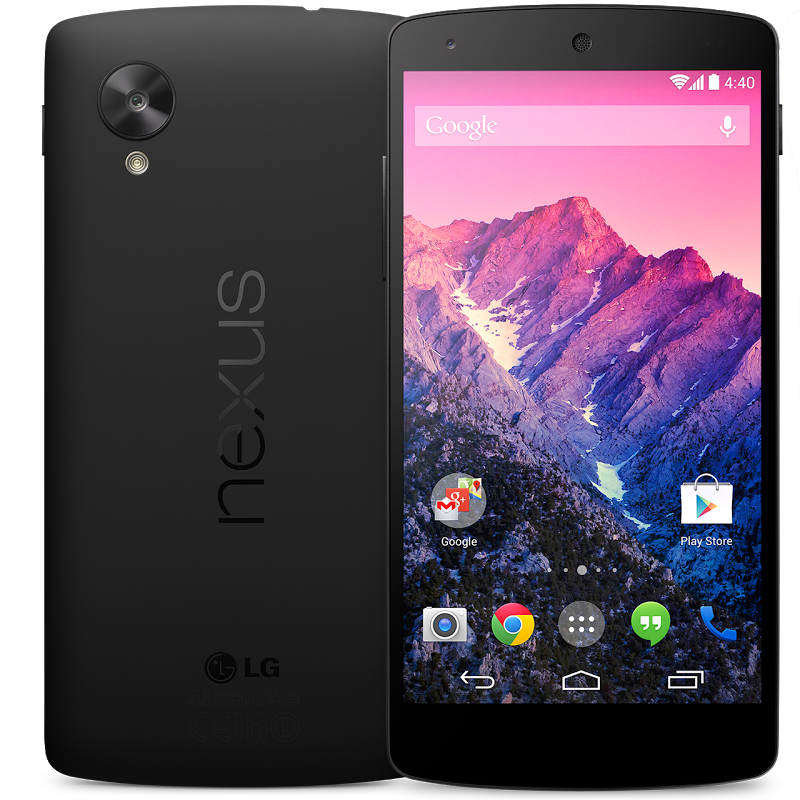
You want the best smartphone, right? We've whittled our constantly updated selection down to the 10 best handsets you can get your hands on right now - but after you've checked out number one, we've still got plenty of other options to feast your eyes on.
We've all got at least one mobile phone each, right? We've probably got about three or four nowadays, and that counts giving your old Nokia 3310 to your Mum a few years ago.
But while you used to be able to just bank on the new Nokia or always get the next Sony Ericsson because it had a half-decent camera, there are now so many great options out there from loads of manufacturers.
The trouble is, how do you decide which is the best one for you?
Well, this is where we make it easy: we've played with nearly every device on the market and have found the ten best you can spend your money on. It needs to be good, after all, given it will reside in your pocket for the next two years.
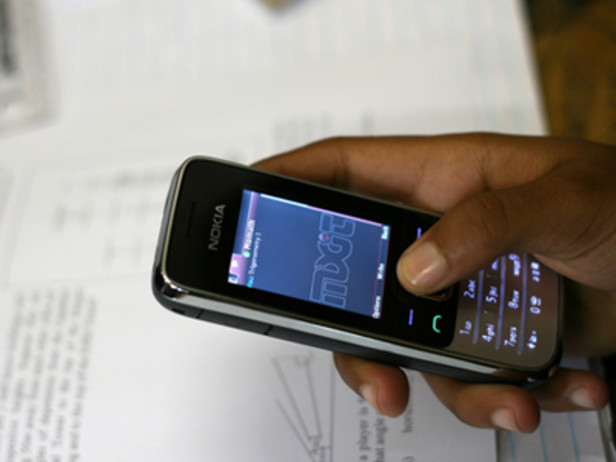
A student uses a Nokia cellphone to do math during a class in South Africa. The United Nations Educational, Scientific and Cultural Organization believes it's time for the widespread use of mobile phones in educational development.
From micro-finance to agriculture, mobile phones are common tools in development programs.
However, many organizations that use these services are finding out the solutions they provide don’t have the same applications as in other sectors — that’s why UNESCO believes it’s time for the widespread use of mobile phones in educational development.
This U.N. agency is now implementing four different pilot projects in partnership with Nokia in Nigeria, Mexico, Senegal and Pakistan, aimed at “enhancing the role of teachers in developing world,” using mobile phones to deliver educational content. UNESCO would like to scale up the programs that have proven to be more successful, but numerous challenges stand in the way.
“The promise here is to reach a large number of [people] in a cost-effective way,” Mark West, UNESCO project officer for teacher development and education policies, told Devex at the European Development Days in Brussels, where ICTs have been central in the debates over the future of development cooperation.
Pushing a cultural shift
Why hasn’t the potential of mobile devices in education been fully realized? The question seems to be more cultural than technological.
“Mobile technologies have been viewed historically as entertainment devices whether they are distracting and a sort of antithetical to education,” explained West, who added there signs that indicate a relevant shift in the attitude from mobile devices being strictly banned in formal learning environments, to governments making large purchases of PCs and tablets.
In UNESCO’s view, mobile technology will not certainly replace the right to high-quality education, but it can open up great learning opportunities to who have no access to any kind of education at all.
West couldn’t provide figures or prospects for future investment yet, but the intent of scaling up the programs is clear.
UNESCO is also currently discussing a partnership with China for the implementation of educational programs in certain African nations, where mobile learning can be included as one of the educational tools made available to students.
“We are currently assessing the needs, meeting with different stakeholders and with teachers’ training institutions,” said West.
The UNESCO project officer believes the four pilot programs are showing how crucial private-public partnerships can be, and Nokia is giving them practical advice and tips on solutions to overcome many of the major implementation constrains.
“The partnership is mutually reinforcing,” he said of a relationship with the Finnish manufacturer, who is expected to help bring more private partners on board.
Challenges ahead
But what are the major obstacles to enhancing the role of mobile phones as learning tools?
Familiarity with ITCs. For instance, this is a major challenge in the program in Nigeria. Even if many teachers already own and know how to use the devices, they are unaware of all the features of the operating systems or how to correctly connect to the Internet. “ICT literacy can be a little bit tricky … you have to invest in that … [so the] teachers [can] learn,” noted the UNESCO project officer.
Mobile phone habits differ from country to country. In some partner countries, people use as many as four or five SIM cards to avail of the different promotions offered by the service providers, thus constantly changing their numbers. This in turn requires technical adjustments in the way education contents are accessed. “We didn’t — I wouldn’t say — underestimate, but recognize how often people are going to change the SIMs,” said West.
Connectivity. Even if network coverage is improving quickly — in Nigeria, for example, 90 percent of the population is covered — there are still black spots. According to West, the question is, again, training users: “When there is no connectivity, some people just say ‘That doesn’t not work,’ [so we taught them] to be more persistent with the service, that they have to try in different locations, different places [or times], and eventually it will work,” noted the official.
Who foots the hardware bill? “Those are tricky discussions and conversations. Should every teacher in project have the same phones? This is not fair, people have different hardware,” said West. “In Nigeria, UNESCO provided teachers with the phones. But we obviously can’t [do that in] all elementary school teachers … There’s no hardware producer that could ever afford to do that … so we hope that people will use their own mobile handsets.”
Data cost. Even if the service itself is free, there are always connection costs. UNESCO provided mobile credit, but a cent can mean dollars at the end of the month. There have been experiments with free access certain contents, like Wikipedia has been doing. “That’s quite unique and requires a tremendous amount of negotiations, signing contracts … that’s a huge endeavour. Wikipedia had the resources to do that … We hope in the future that is a possibility and becomes a kind of common model for [providing free content] to teachers and students,” concluded the the U.N. agency’s project officer.
Mobile phones have changed how we negotiate our relationships with family, spouses and close friends. Increased levels of mobile phone subscriptions are linked with improvements in education, gender equality and political participation, particularly in developing countries. They are also associated with higher economic growth.
These are among the findings of a research report by the Cologne Institute for Economic Research, which explores the ways in which mobile technologies influence economics, society and people’s private lives across 10 countries – the UK, Germany, Italy, Spain, China, India, Turkey, Egypt, Kenya and South Africa.
The report – ‘Mobile Technologies: The Digital Fabric of Our Lives’, commissioned and published by the Vodafone Institute for Society and Communications – bases its findings on numerous sources, including interviews with 10 top academic researchers and a worldwide survey of Vodafone country experts.
Relationship
Mobile phones have altered our relationships with family, spouses and close friends. But while they seem to promise a wider social network, more than half of the average person’s calls and texts go to only four to six different people.
Health
Mobile phones significantly help to maintain physical and psychological health when family members move away from home. And they enable women to maintain three roles within the household, simultaneously being wives, mothers and wage earners.
Political Participation
More mobile phone subscriptions are correlated with more democratic participation, less gender inequality and longer time spent in education. In all three areas, the impact of mobiles on social development indicators is stronger in developing countries.
Economic Growth
Mobile technologies contribute significantly to GDP growth, with a forecast range of between 1.8% in the UK and 24.9% in Egypt over the years 2010-2020, compared with today’s GDP. Again, the effects will be larger in developing countries.
This history focuses on communication devices which connect wirelessly to the public switched telephone network. Thetransmission of speech by radio has a long and varied history going back to Reginald Fessenden's invention and shore-to-ship demonstration of radio telephony. The first mobile telephones were barely portable compared to today's compact hand-held devices. Along with the process of developing more portable technology, drastic changes have taken place in the networking of wireless communication and the prevalence of its use.
Handheld mobile phone
Prior to 1973, mobile telephony was limited to phones installed in cars and other vehicles. Motorola was the first company to produce a handheld mobile phone. On 3 April 1973 when Martin Cooper, a Motorola researcher and executive, made the first mobile telephone call from handheld subscriber equipment, placing a call to Dr. Joel S. Engel of Bell Labs. The prototype handheld phone used by Dr. Cooper weighed 1.1 kg and measured 23 cm long, 13 cm deep and 4.45 cm wide. The prototype offered a talk time of just 30 minutes and took 10 hours to re-charge.
John F. Mitchell, Motorola's chief of portable communication products and Cooper's boss in 1973, played a key role in advancing the development of handheld mobile telephone equipment. Mitchell successfully pushed Motorola to develop wireless communication products that would be small enough to use anywhere and participated in the design of the cellular phone.
Martin Cooper (inventor)
Martin "Marty" Cooper (born December 26, 1928 in Chicago, Illinois, United States) is an American pioneer and visionary in the wireless communications industry. With eleven patents in the field, he is recognized as an innovator in radio spectrum management.
While at Motorola in the 1970s, Cooper conceived the first handheld mobile phone (distinct from the car phone) and led the team that developed it and brought it to market in 1983. He is considered the "father of the cell phone" and is also cited as the first person in history to make a handheld cellular phone call in public.
Cooper is co-founder of numerous successful communications companies with his wife and business partner Arlene Harris; also known as the "first lady of wireless." He is currently co-founder and Chairman of Dyna LLC, in Del Mar, California. Cooper also sits on committees supporting the Federal Communications Commission and the United States Department of Commerce.
Mobile technology is the technology used for cellular communication. Mobile code division multiple access (CDMA) technology has evolved rapidly over the past few years.
Since the start of this millennium, a standard mobile device has gone from being no more than a simple two-way pager to being a mobile phone, GPS navigation device, an embedded web browser and instant messaging client, and a handheld game console.
Many experts argue that the future of computer technology rests in mobile computing with wireless networking. Mobile computing by way of tablet computers are becoming more popular. Tablets are available on the 3G and 4G networks.
Operating System
Many types of mobile operating systems (OS) are available for smartphones, including: Android, BlackBerry OS, webOS, iOS, Symbian, Windows Mobile Professional (touch screen), Windows Mobile Standard (non-touch screen), and Bada. Among the most popular are the Apple iPhone, and the newest - Android. Android is a mobile operating system (OS) developed by Google. Android is the first completely open source mobile OS, meaning that it is free to any cell phone carrier. The Apple iPhone, which has several OSs like the 3G and 3G S, is the most popular smart phone at this time, because of its customizable OS which you can use to download applications ("apps") made by Apple like games, GPS, Utilities, and other tools. Any user can also create their own Apps and publish them to Apple's App Store. The Palm Pre using webOS has functionality over the Internet and can support Internet-based programming languages such as Cascading Style Sheets (CSS), HTML, and JavaScript. The Research In Motion (RIM) BlackBerry is a smartphone with a multimedia player and third-party software installation. The Windows Mobile Professional Smartphones (Pocket PC or Windows Mobile PDA) are like that of a personal digital assistant (PDA) and have touchscreen abilities. The Windows Mobile Standard does not have a touch screen but uses a trackball, touchpad, rockers, etc.
The original smartphone OS is Symbian, with a rich history and the largest marketshare until 2011. Although no single Symbian device has sold as many units as the iPhone, Nokia and other manufacturers (currently including Sony Ericsson and Samsung, and previously Motorola) release a wide variety of Symbian models each year which gave Symbian the greatest marketshare.Now symbian has been kicked out of the market